Redesigned it
Refreshed the whole look by changing design tokens, not pages: retired a flat brown accent for a warmer terracotta that carried across every page at once, and tightened the hero type. One instruction, a consistent site.
Meet Bernard: an AI that audits, redesigns and repairs live websites. Safely, on a draft, with a human approving every change.
I'm Lindsay. I don't just advise on where AI is heading — I ship the tools that get there. Bernard treats a website the way a senior engineer does: read the design system, change the tokens, fix the broken component, run the audit. No new dashboard to learn. You describe the outcome; it does the work and hands you a draft to approve. Also creator of PlanB Backups and 60 Bubble plugins.
Want this calibre on your platform? Work with me →

Proof, not pitch
Refreshed the whole look by changing design tokens, not pages: retired a flat brown accent for a warmer terracotta that carried across every page at once, and tightened the hero type. One instruction, a consistent site.
The mobile menu was dead — its toggle script had been stripped for security. Bernard diagnosed the cause, rebuilt it as a pure-CSS toggle, and tested that it actually opens and closes. No developer, no ticket.
Ran a full SEO pass over every page: found the site had no canonical tags, flagged missing H1s and a broken RSS link, and pulled real Lighthouse scores. Findings you can act on, not a PDF you file.
The vision
For twenty years, changing a website meant learning its dashboard — where the button lives, which panel hides the setting, what breaks if you touch it. That was never the work. It was the tax on the work.
Bernard removes the tax. You say what you want; the agent reads the site the way an engineer would and makes the change, safely, for you to approve. That's the shape of where software is going — not a chatbot bolted onto an admin panel, but the agent as the interface. I build for that future because I think it's the right one, and because the businesses that reach it first will own the next decade.
Under the hood
Bernard is a real tool surface an AI operates directly — dozens of typed tools to read the design tokens, patch the CSS, run the SEO audit, place an image. Designing that surface well is most of the battle.
Every change lands on a draft you approve — nothing goes live on its own. Scripts are stripped on the way in, so the agent physically can't inject tracking or malware. Guardrails in the architecture, not the prompt.
It doesn't hand-edit blindly. It reads the design system and changes tokens, so one instruction updates every page consistently — the way a senior front-end dev works, not a find-and-replace.
Redesign, then measure: contrast ratios, tap targets, layout overflow, real Lighthouse scores. It verifies the change landed and stayed accessible before telling you it's done.
What this says about working with me
Most people advising on AI have read about it. I ship it — the safety models, the agent tool design, the unglamorous verification loops that decide whether a thing works in production or just in a demo. That's the same judgement I bring when your platform is the thing your numbers depend on: I make the build/buy/stay call, design the migration, and hold the result to the business.
Agentic workflows, where they break, and what actually ships. The same thinking that went into Bernard, written up for anyone building with AI agents.
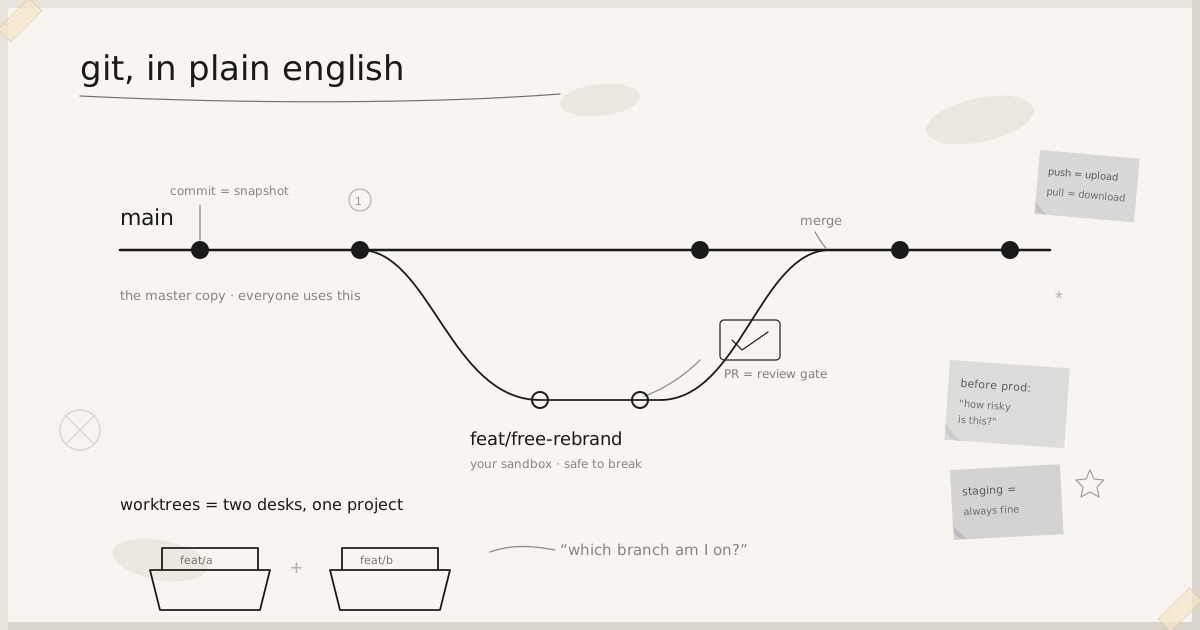
The handful of Git words a non-developer needs to recognise when building with Claude Code, why main is the master copy, and a copy-paste CLAUDE.md that makes Claude flag risk before you deploy.
Read article →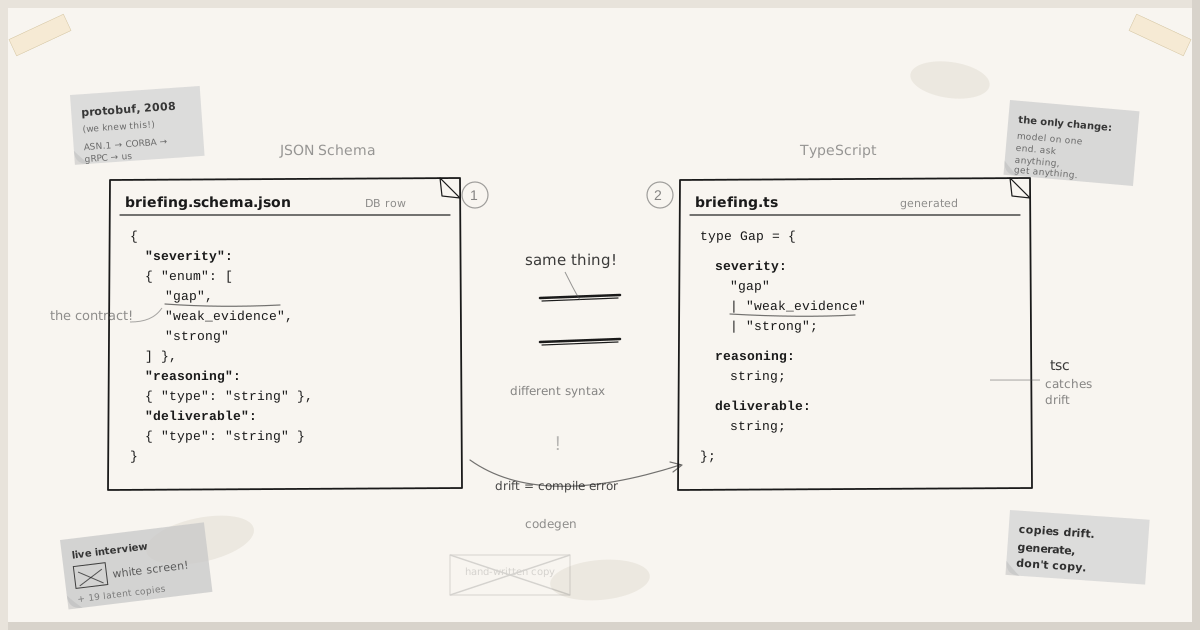
A renamed enum crashed a live interview. The fix: generate the consumer's TypeScript directly from the schema column in the database. The entire drift class becomes a compile error.
Read article →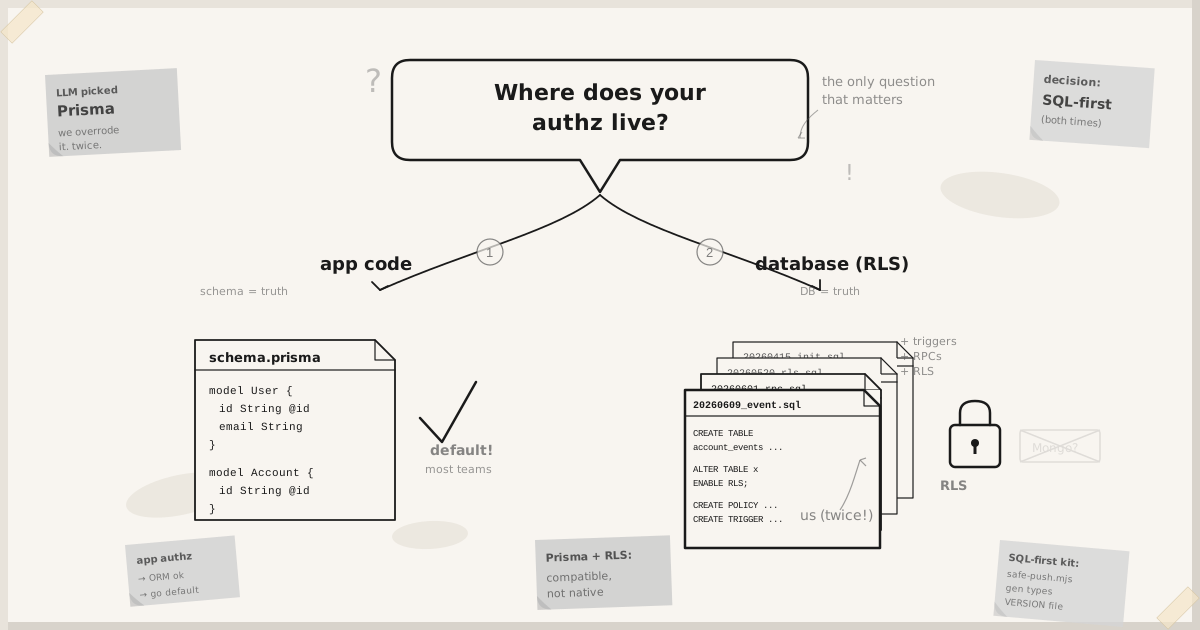
Practical lessons from production AI automation — context isolation, structured logging, and why bad input produces confident, plausible wrong output instead of a crash.
Read article →
Operational work used to need a team because the cost wasn't the work. It was the context switch. An agent in the terminal collapses it.
Read article →